"CRISIS IN CARE"
VERMONT COLLEGE OF FINE ARTS
HENRY SIMONDS
Henry J. Simonds (Pittsburgh, Pa.) is a multi-disciplinary artist, filmmaker, writer, and performer. His work explores the mundane and curious aspects of everyday life. Taking inspiration from the simplest domestic objects to the most complex substances that form the fabric of our personal identities, Henry practices the “art of curiosity.” His creative investigations attempt to highlight or challenge the things that we humans take for granted. With wit, humor, and a dedication to extensive research, he hopes to entice viewers to think more deeply and thoughtfully about the world and our place within it. Committed to principles of sustainability and justice, he tries to observe an ideology of “ethical aesthetics,” keeping in mind the sources of materials and content and the potential impact of his creations. Though often didactic in nature, with pedagogical or activist undercurrents, Simonds’ projects are first and foremost celebrations of the joy of “making” and the pursuit of elevated craft. His pieces demonstrate his devotion to labor and precision but without unnecessary flourishes or embellishments. Whether playing with sculptural forms, photography, video, print-making, and so on, the results of his experimentation are always an outgrowth of his constant and tireless pursuit of inquiry.
Liberal/Arts/Education: In this graduate exhibition, I have chosen to feature a handful of projects that honor my growth as an artist over the last two years while attempting to respond to the great perturbations of this specific moment. Being in school—particularly returning as a 40-something husband and father of two—is already an unsettling experience; but trying to reflect upon my development during my time at VCFA and create a body of work that showcases that progression, while navigating the fears, stresses, and disruptions of a global pandemic, was daunting. It was truly an education.
These past four semesters have exposed me to so much—so much of myself, so many new ideas and ways of thinking, so much passion and talent in others, so many different disciplines and fields of study—that I have been humbled by the experience. It has been such a time of experimentation and wonder—and anxiety and discomfort—that I hadn’t felt since my earliest days in college, when I was free to explore the many paths open to me through the Liberal Arts curriculum at my school. Yielding to that sense of freedom and unchecked potential, and with a nod to the learning I have just enjoyed; I have framed this exhibition through the lens of that pedagogical spirit. Each of my works in this show is labelled with both the title of the piece and the name of a specific course offering at a Liberal Arts institution. In the text that accompanies each work, I’ve included the respective course catalog description and my own thoughts and motivations behind it. As the title of this show suggests, it is my gratitude for the freedom, creativity, and learning that I have savored these last seven-hundred and thirty-one days that I wish to share with you all. Maybe you’ll even learn a little something yourself!
COPING IN ISOLATION
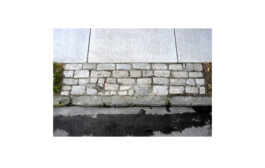
"COPING IN ISOLATION #1" - HENRY SIMONDS
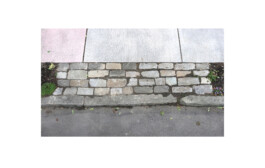
"COPING IN ISOLATION #2" - HENRY SIMONDS
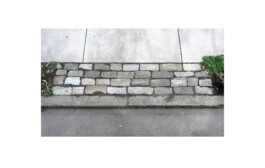
"COPING IN ISOLATION #3" - HENRY SIMONDS
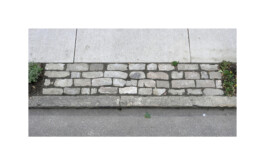
"COPING IN ISOLATION #4" - HENRY SIMONDS
Reflections on the value of and potential for the arts and creativity in the face of the calamities of 2020.
The Performative Landscape
How often do we stop to consider the ways in which we not only move through, but also construct our surroundings? Landscape, architecture, and the human body interact to shape our day to day perception and experiences. In this class we will explore how individuals perceive and understand space, while investigating how the manipulation of landscape, architecture, and the human body taken together can affect how individuals interact, communicate, and collaborate. This course will have a performance element. ART WTR (MCCC)
On March 23, Governor Tom Wolf, instituted stay-at-home orders for Pennsylvania counties hit hardest by the accelerating coronavirus pandemic. Allegheny, the county in which I live with my family, was one of those affected. We had already been living in relative isolation for ten days since the closing of my kids’ school, but this new measure marked the beginning of a ten-week period during which I had little or no contact with people outside my immediate family and only ventured out of the house for groceries, essentials, and welcome bouts of exercise. I was lucky to be able to go to my studio, where I could work alone safely; but I needed an escape while at home from the stress and anxiety of home-schooling and too close quarters. As a way to fill the seemingly endless hours of tedium and blow off some steam, I took on a long-contemplated project to transform the lifeless strip of mud and clay between my sidewalk and our road into something more presentable. I had an idea that if I created a number of distinct stone buffers within the berm—Pennsylvania’s term for the median or road verge—that people would choose to park by those spaces and wouldn’t trample on the plants I hoped to put in. I found a stache of old Belgian block not too far away and spent the next six weeks hauling and placing the heavy stones by hand. It was hard, gratifying work and proved to be a cathartic and creative way to cope with the crisis and its tensions. It was pure and elemental and just what I needed. My theory about influencing drivers’ behaviors also proved accurate, as I quickly discovered that people were indeed using the buffers to park and leaving my landscaping well enough alone. My little project had brought comfort, beauty, and relief in a time of wild uncertainty.
HARLEQUINADE
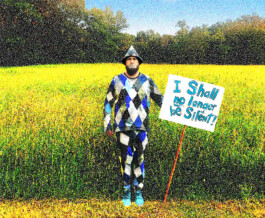
"I SHALL NO LONGER BE SILENT!" - HENRY SIMONDS
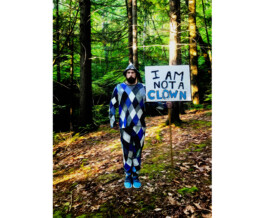
"I AM NOT A CLOWN!" - HENRY SIMONDS
Radical Humanity: Performance and Social Activism
In this course we will cover the history of performance art and the dynamic power of activism; we will focus primarily on the collaborative creation of performance infused with a social conscience. Content will range from political science to women and gender studies to civil rights. Looking at art-making through the eyes of pivotal historical figures in addition to contemporary artists, we will gather techniques to develop solo and group performances. Readings, films, journal writing, and studio research will be an integral part of this highly experiential class. ART WTR (MCCC)
Harlequin is one of the classic zanni servant characters from Italian commedia dell’arte. He has been a figure of fascination to me since I first discovered him depicted in Modernist paintings during an art history class my freshman year in college. He has recently reemerged as an alter ego of sorts in new performance-based work that I began experimenting with while in the VCFA program. Harlequinade is a British comic theatrical genre developed in the 17th century. It features many of the traditional commedia dell’arte stock characters. In this form, though, Harlequin acquired a more dignified, central narrative role, typically playing opposite the newer comic foil of clown. These performances evolved into pantomime over time, “robbing” Harlequin of his voice. These Harlequinades stand as symbolic demands to give Harlequin back his voice and liberate him from his silence. They are also a gesture of solidarity with current social justice movements and play with complex notions of the role of the artist—and my own— in contemporary society.
COLUMBINA
UNITS OF UNDERSTANDING
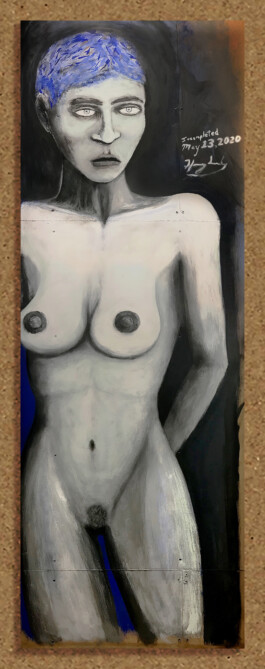
"COLUMBINA" - HENRY SIMONDS
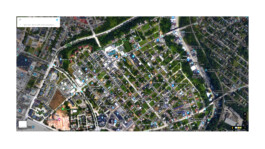
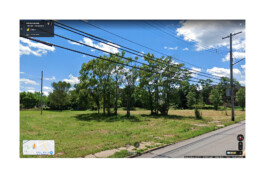
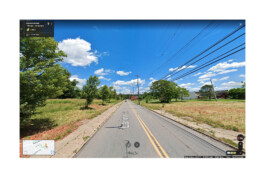
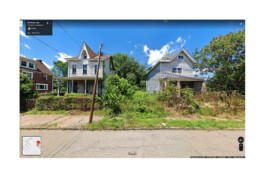
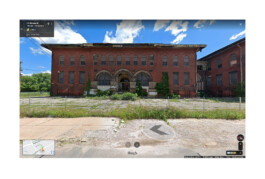
"LARIMER" - HENRY SIMONDS
"THIS WAS ONCE A BUSINESS" - HENRY SIMONDS
"THIS WAS ONCE A COMMUNITY" - HENRY SIMONDS
"THIS WAS ONCE A HOME" - HENRY SIMONDS
"THIS WAS ONCE A SCHOOL" - HENRY SIMONDS
Sociology of Heterosexuality
Most people believe that heterosexuality is natural or rooted in biology and so never look very closely at it as a product of culture. In this course we will examine the artifacts, institutions, rituals, and ideologies that construct heterosexuality and the heterosexual person in American culture. We will also pay close attention to how heterosexuality works alongside other forms of social power, especially gender, race, and class. 3 hrs. lect. (Sociology) AMR NOR SOC (MCCC)
Throughout my time at VCFA, my Artist Mentors regularly suggested that I allow for more open experimentation in the studio, to develop a sense of play and exploration of the materials and ideas that I was investigating. During this final semester, I tried to take these recommendations to heart and left space in my practice to follow the various paths that my process offered. Columbina is a product of this willingness to be receptive in the moment. While I was painting the diamond patterning on the Harlequin suit (worn in the Harlequinade series included in this exhibition), I felt an urge to make use of the remnants that were still on the brushes after each application of color and began an impromptu mural on the bathroom wall of my studio. A face and then a figure began to emerge as I added small patches of whatever color was clinging to the brush that day. I am not a painter, but I became transfixed by the casual exercise of extracting the most out of the limited supply of paint and palette. Although the subject of a nude woman was not one I conscious considered, I realize that the image that materialized was so much a product of preconceptions of beauty and desire that I had developed over time and that I had repeatedly been drawn to depicting idealized bodily forms since I began to draw and doodle as a kid. Whatever Freudian impulses this painting reveals—particularly that, while in the making, the quarantine amplified the stresses on the domestic front—I came to welcome the notion that this painting represents the figure of Columbina, Harlequin’s lover and the object of his passions and desire.
Subjugation, Discrimination and Political Transformation
Our goal, in this course, is twofold. First, to identify different ways in which members of a community can be subjugated and marginalized. Second, to ask ourselves what kind of ethical and strategic considerations should inform our response to instances of subjugation and discrimination, if our primary concern is that our actions be at once faithful to the values that we stand for and politically efficacious. We will study works by Simone Weil, Michel Foucault, Martin Luther King Jr., Primo Levi, Simone de Beauvoir, Charles W. Mills, and Epictetus among others. We will also use films and press articles as material for case studies. (Previous Philosophy class or waiver) 3 hrs. sem. PHL (MCCC)
I moved back to my hometown, Pittsburgh, in 2017. I had been living in New York City since 2008, but I visited home often and stayed involved here as best I could. When I returned, I tried to reacquaint myself with the city on bike rides and trips to various neighborhoods around town. On one of these outings, I found myself in Larimer.
Larimer is one of Pittsburgh’s poorest and most challenged neighborhoods.* Known as Pittsburgh’s Little Italy until the 1960’s, the community’s population is now primarily African-American. Once “urban redevelopment” and White flight had begun to change the character of the neighborhood, a half-century of disinvestment and racially-biased neglect has transformed its once bustling streets into a ghost town. 750 lots in Larimer sit empty or carry vacant homes—nearly 42% of the buildings and land. This is not some isolated or obscure area of the city. Its borders are shared by three of the wealthiest neighborhoods in the city. Google—whose technology allowed me to capture these images—houses its Pittsburgh offices in a new development in Larimer's southern end. But, if you head further into the empty heart of the community—north and to the east, where the Black residents live—the city has been erased. It is uncanny. It is a prairie town in the middle of this “Most Livable City.”† (HJS)
(*Luckily, Larimer has such tireless champions and advocates as Miss Donna and Miss Betty making headway to turn things around for the neighborhood, fighting for new housing and development initiatives to benefit locals and not just real estate speculators.)
(† Pittsburgh has been regularly named or won top honors as a “Most Livable City” according to The Global Liveability Index.)
(GRADUATE SHOW)
"CRISIS IN CARE"
VERMONT COLLEGE OF FINE ARTS
HENRY SIMONDS
Henry J. Simonds (Pittsburgh, Pa.) is a multi-disciplinary artist, filmmaker, writer, and performer. His work explores the mundane and curious aspects of everyday life. Taking inspiration from the simplest domestic objects to the most complex substances that form the fabric of our personal identities, Henry practices the “art of curiosity.” His creative investigations attempt to highlight or challenge the things that we humans take for granted. With wit, humor, and a dedication to extensive research, he hopes to entice viewers to think more deeply and thoughtfully about the world and our place within it. Committed to principles of sustainability and justice, he tries to observe an ideology of “ethical aesthetics,” keeping in mind the sources of materials and content and the potential impact of his creations. Though often didactic in nature, with pedagogical or activist undercurrents, Simonds’ projects are first and foremost celebrations of the joy of “making” and the pursuit of elevated craft. His pieces demonstrate his devotion to labor and precision but without unnecessary flourishes or embellishments. Whether playing with sculptural forms, photography, video, print-making, and so on, the results of his experimentation are always an outgrowth of his constant and tireless pursuit of inquiry.
Liberal/Arts/Education: In this graduate exhibition, I have chosen to feature a handful of projects that honor my growth as an artist over the last two years while attempting to respond to the great perturbations of this specific moment. Being in school—particularly returning as a 40-something husband and father of two—is already an unsettling experience; but trying to reflect upon my development during my time at VCFA and create a body of work that showcases that progression, while navigating the fears, stresses, and disruptions of a global pandemic, was daunting. It was truly an education.
These past four semesters have exposed me to so much—so much of myself, so many new ideas and ways of thinking, so much passion and talent in others, so many different disciplines and fields of study—that I have been humbled by the experience. It has been such a time of experimentation and wonder—and anxiety and discomfort—that I hadn’t felt since my earliest days in college, when I was free to explore the many paths open to me through the Liberal Arts curriculum at my school. Yielding to that sense of freedom and unchecked potential, and with a nod to the learning I have just enjoyed; I have framed this exhibition through the lens of that pedagogical spirit. Each of my works in this show is labelled with both the title of the piece and the name of a specific course offering at a Liberal Arts institution. In the text that accompanies each work, I’ve included the respective course catalog description and my own thoughts and motivations behind it. As the title of this show suggests, it is my gratitude for the freedom, creativity, and learning that I have savored these last seven-hundred and thirty-one days that I wish to share with you all. Maybe you’ll even learn a little something yourself!
COPING IN ISOLATION
"COPING IN ISOLATION #1" - HENRY SIMONDS
"COPING IN ISOLATION #2" - HENRY SIMONDS
"COPING IN ISOLATION #3" - HENRY SIMONDS
"COPING IN ISOLATION #4" - HENRY SIMONDS
Reflections on the value of and potential for the arts and creativity in the face of the calamities of 2020.
The Performative Landscape
How often do we stop to consider the ways in which we not only move through, but also construct our surroundings? Landscape, architecture, and the human body interact to shape our day to day perception and experiences. In this class we will explore how individuals perceive and understand space, while investigating how the manipulation of landscape, architecture, and the human body taken together can affect how individuals interact, communicate, and collaborate. This course will have a performance element. ART WTR (MCCC)
On March 23, Governor Tom Wolf, instituted stay-at-home orders for Pennsylvania counties hit hardest by the accelerating coronavirus pandemic. Allegheny, the county in which I live with my family, was one of those affected. We had already been living in relative isolation for ten days since the closing of my kids’ school, but this new measure marked the beginning of a ten-week period during which I had little or no contact with people outside my immediate family and only ventured out of the house for groceries, essentials, and welcome bouts of exercise. I was lucky to be able to go to my studio, where I could work alone safely; but I needed an escape while at home from the stress and anxiety of home-schooling and too close quarters. As a way to fill the seemingly endless hours of tedium and blow off some steam, I took on a long-contemplated project to transform the lifeless strip of mud and clay between my sidewalk and our road into something more presentable. I had an idea that if I created a number of distinct stone buffers within the berm—Pennsylvania’s term for the median or road verge—that people would choose to park by those spaces and wouldn’t trample on the plants I hoped to put in. I found a stache of old Belgian block not too far away and spent the next six weeks hauling and placing the heavy stones by hand. It was hard, gratifying work and proved to be a cathartic and creative way to cope with the crisis and its tensions. It was pure and elemental and just what I needed. My theory about influencing drivers’ behaviors also proved accurate, as I quickly discovered that people were indeed using the buffers to park and leaving my landscaping well enough alone. My little project had brought comfort, beauty, and relief in a time of wild uncertainty.
HARLEQUINADE
"I SHALL NO LONGER BE SILENT!" - HENRY SIMONDS
"I AM NOT A CLOWN!" - HENRY SIMONDS
Radical Humanity: Performance and Social Activism
In this course we will cover the history of performance art and the dynamic power of activism; we will focus primarily on the collaborative creation of performance infused with a social conscience. Content will range from political science to women and gender studies to civil rights. Looking at art-making through the eyes of pivotal historical figures in addition to contemporary artists, we will gather techniques to develop solo and group performances. Readings, films, journal writing, and studio research will be an integral part of this highly experiential class. ART WTR (MCCC)
Harlequin is one of the classic zanni servant characters from Italian commedia dell’arte. He has been a figure of fascination to me since I first discovered him depicted in Modernist paintings during an art history class my freshman year in college. He has recently reemerged as an alter ego of sorts in new performance-based work that I began experimenting with while in the VCFA program. Harlequinade is a British comic theatrical genre developed in the 17th century. It features many of the traditional commedia dell’arte stock characters. In this form, though, Harlequin acquired a more dignified, central narrative role, typically playing opposite the newer comic foil of clown. These performances evolved into pantomime over time, “robbing” Harlequin of his voice. These Harlequinades stand as symbolic demands to give Harlequin back his voice and liberate him from his silence. They are also a gesture of solidarity with current social justice movements and play with complex notions of the role of the artist—and my own— in contemporary society.
COLUMBINA
"COLUMBINA" - HENRY SIMONDS
Sociology of Heterosexuality
Most people believe that heterosexuality is natural or rooted in biology and so never look very closely at it as a product of culture. In this course we will examine the artifacts, institutions, rituals, and ideologies that construct heterosexuality and the heterosexual person in American culture. We will also pay close attention to how heterosexuality works alongside other forms of social power, especially gender, race, and class. 3 hrs. lect. (Sociology) AMR NOR SOC (MCCC)
Throughout my time at VCFA, my Artist Mentors regularly suggested that I allow for more open experimentation in the studio, to develop a sense of play and exploration of the materials and ideas that I was investigating. During this final semester, I tried to take these recommendations to heart and left space in my practice to follow the various paths that my process offered. Columbina is a product of this willingness to be receptive in the moment. While I was painting the diamond patterning on the Harlequin suit (worn in the Harlequinade series included in this exhibition), I felt an urge to make use of the remnants that were still on the brushes after each application of color and began an impromptu mural on the bathroom wall of my studio. A face and then a figure began to emerge as I added small patches of whatever color was clinging to the brush that day. I am not a painter, but I became transfixed by the casual exercise of extracting the most out of the limited supply of paint and palette. Although the subject of a nude woman was not one I conscious considered, I realize that the image that materialized was so much a product of preconceptions of beauty and desire that I had developed over time and that I had repeatedly been drawn to depicting idealized bodily forms since I began to draw and doodle as a kid. Whatever Freudian impulses this painting reveals—particularly that, while in the making, the quarantine amplified the stresses on the domestic front—I came to welcome the notion that this painting represents the figure of Columbina, Harlequin’s lover and the object of his passions and desire.
UNITS OF UNDERSTANDING
"LARIMER" - HENRY SIMONDS
"THIS WAS ONCE A BUSINESS" - HENRY SIMONDS
"THIS WAS ONCE A COMMUNITY" - HENRY SIMONDS
"THIS WAS ONCE A HOME" - HENRY SIMONDS
"THIS WAS ONCE A SCHOOL" - HENRY SIMONDS
Subjugation, Discrimination and Political Transformation
Our goal, in this course, is twofold. First, to identify different ways in which members of a community can be subjugated and marginalized. Second, to ask ourselves what kind of ethical and strategic considerations should inform our response to instances of subjugation and discrimination, if our primary concern is that our actions be at once faithful to the values that we stand for and politically efficacious. We will study works by Simone Weil, Michel Foucault, Martin Luther King Jr., Primo Levi, Simone de Beauvoir, Charles W. Mills, and Epictetus among others. We will also use films and press articles as material for case studies. (Previous Philosophy class or waiver) 3 hrs. sem. PHL (MCCC)
I moved back to my hometown, Pittsburgh, in 2017. I had been living in New York City since 2008, but I visited home often and stayed involved here as best I could. When I returned, I tried to reacquaint myself with the city on bike rides and trips to various neighborhoods around town. On one of these outings, I found myself in Larimer.
Larimer is one of Pittsburgh’s poorest and most challenged neighborhoods.* Known as Pittsburgh’s Little Italy until the 1960’s, the community’s population is now primarily African-American. Once “urban redevelopment” and White flight had begun to change the character of the neighborhood, a half-century of disinvestment and racially-biased neglect has transformed its once bustling streets into a ghost town. 750 lots in Larimer sit empty or carry vacant homes—nearly 42% of the buildings and land. This is not some isolated or obscure area of the city. Its borders are shared by three of the wealthiest neighborhoods in the city. Google—whose technology allowed me to capture these images—houses its Pittsburgh offices in a new development in Larimer's southern end. But, if you head further into the empty heart of the community—north and to the east, where the Black residents live—the city has been erased. It is uncanny. It is a prairie town in the middle of this “Most Livable City.”† (HJS)
(*Luckily, Larimer has such tireless champions and advocates as Miss Donna and Miss Betty making headway to turn things around for the neighborhood, fighting for new housing and development initiatives to benefit locals and not just real estate speculators.)
(† Pittsburgh has been regularly named or won top honors as a “Most Livable City” according to The Global Liveability Index.)