"CRISIS IN CARE"
VERMONT COLLEGE OF FINE ARTS
AMY BERNARD
In her 2005 text, A Field Guide to Getting Lost, writer Rebecca Solnit contemplates the idea of discovery, and poses the question meditated on by ancient philosophers:
How will you go about finding
That thing
The nature of which is totally unknown to you?
This question resonated with me, as I moved through this program, and my life, there at VCFA, here in my home studio, and attempted to zero in on what is unknown to me, which ultimately, became, myself. I recall sitting in Noble Hall in July of 2018, when co-chair of the program, Mario Ontiveros said, “What does effective art do? It produces a discourse.” The challenge for me was to journey inward so that I could find that discourse. This journey of discovering what is unknown to me became a pilgrimage of self awareness and discovery, and an expedition that I believe is only beginning. As a woman reared in a patriarchal culture, I have often been silenced, told to calm down, told to try and relax. I became very adept at pushing my feelings and emotions down until they would erupt in panic, anxiety or rage. I create art to confront these repressed feelings and emotions. My studies gave me the space to celebrate discomfort and voice what was urgent through my artistic practice.
As an educator, I entered my field to spread my love of art, and instill the healing power that art can have. Through art, I am able to talk about uncomfortable topics such as gun violence, gun control, manipulation of the public by the governmental systems meant to serve and protect, and ultimately, the commodification of people who are marginalized by these same systems. As a teacher, my voice becomes a tool, I draw the students in with my “teacher voice” which is not unlike speaking in a theatrical production. I must be more animated and excited than usual, as well as project my voice well to be heard. I watched The Yes Men: Share the Safety and was immediately drawn to the humor, and satire that these performance artists use to tackle difficult topics and inadvertently, broaden their audience to not only “like minded” individuals but to people on opposite sides of the issues.
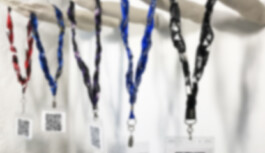
For my installation piece, How To Be A Good Teacher In The 21st C., I made specific material choices that embody the institutionalized experience of gun violence in our schools. Porcelain is pure, and highly prized as a luxurious material which appears delicate and lovely, but is in fact very strong and durable. Porcelain is able to withstand intense amounts of pressure, just like educators. It was important for me to use slip casting to create identical porcelain arms reaching toward viewers. I wanted to convey the strength and value of educators who protect our children every day. As casts produced from a single mold, the multiple porcelain arms convey a sense of commodities on display; they embody the expectation that all educators fit a certain mold and follow a certain path mandated by the administration. We have been shaped and expected to become soldiers of sorts in the battle against gun violence. We are an army assembled by the powers above us, fighting to keep ourselves and our students safe, when the key to safety is common sense gun legislation and updated gun control. Identification lanyards dangle from the porcelain arms. Following incidents of active shooters in schools, there are usually regulations placed on schools by the government, or by school districts by state or region. Some of these addendums to school safety plans are: locking all doors leading into a school, employing armed security at all entrances, fortifying all entrances and school grounds with locked and or guarded fences, utilizing school safety plans handed down from for profit organizations, and requiring all teachers and school personnel to be easily and readily identified by an ID badge. These badges are usually worn around the neck and carry a photo ID of the professional. I collected lanyards from all over the country and braided them together to show the solidarity educators have towards each other. In the ID pockets, are QR codes. When scanned by anyone’s smartphone, the codes will link viewers to videos about how to be a good teacher in the twenty-first century.
The production of the art object has become secondary in my artistic process. First and foremost is the content, giving voice to the discourses that challenge our lives has become the primary objective driving my work. Discovering this ability has been the most important takeaway from this ever evolving body of work, which will most certainly continue.
HOW TO BE A GOOD TEACHER IN THE 21st CENTURY
"HOW TO BE A GOOD TEACHER IN THE 21st CENTURY" — AMY BERNARD
(GRADUATE SHOW)
"CRISIS IN CARE"
VERMONT COLLEGE OF FINE ARTS
AMY BERNARD
In her 2005 text, A Field Guide to Getting Lost, writer Rebecca Solnit contemplates the idea of discovery, and poses the question meditated on by ancient philosophers:
How will you go about finding
That thing
The nature of which is totally unknown to you?
This question resonated with me, as I moved through this program, and my life, there at VCFA, here in my home studio, and attempted to zero in on what is unknown to me, which ultimately, became, myself. I recall sitting in Noble Hall in July of 2018, when co-chair of the program, Mario Ontiveros said, “What does effective art do? It produces a discourse.” The challenge for me was to journey inward so that I could find that discourse. This journey of discovering what is unknown to me became a pilgrimage of self awareness and discovery, and an expedition that I believe is only beginning. As a woman reared in a patriarchal culture, I have often been silenced, told to calm down, told to try and relax. I became very adept at pushing my feelings and emotions down until they would erupt in panic, anxiety or rage. I create art to confront these repressed feelings and emotions. My studies gave me the space to celebrate discomfort and voice what was urgent through my artistic practice.
As an educator, I entered my field to spread my love of art, and instill the healing power that art can have. Through art, I am able to talk about uncomfortable topics such as gun violence, gun control, manipulation of the public by the governmental systems meant to serve and protect, and ultimately, the commodification of people who are marginalized by these same systems. As a teacher, my voice becomes a tool, I draw the students in with my “teacher voice” which is not unlike speaking in a theatrical production. I must be more animated and excited than usual, as well as project my voice well to be heard. I watched The Yes Men: Share the Safety and was immediately drawn to the humor, and satire that these performance artists use to tackle difficult topics and inadvertently, broaden their audience to not only “like minded” individuals but to people on opposite sides of the issues.
For my installation piece, How To Be A Good Teacher In The 21st C., I made specific material choices that embody the institutionalized experience of gun violence in our schools. Porcelain is pure, and highly prized as a luxurious material which appears delicate and lovely, but is in fact very strong and durable. Porcelain is able to withstand intense amounts of pressure, just like educators. It was important for me to use slip casting to create identical porcelain arms reaching toward viewers. I wanted to convey the strength and value of educators who protect our children every day. As casts produced from a single mold, the multiple porcelain arms convey a sense of commodities on display; they embody the expectation that all educators fit a certain mold and follow a certain path mandated by the administration. We have been shaped and expected to become soldiers of sorts in the battle against gun violence. We are an army assembled by the powers above us, fighting to keep ourselves and our students safe, when the key to safety is common sense gun legislation and updated gun control. Identification lanyards dangle from the porcelain arms. Following incidents of active shooters in schools, there are usually regulations placed on schools by the government, or by school districts by state or region. Some of these addendums to school safety plans are: locking all doors leading into a school, employing armed security at all entrances, fortifying all entrances and school grounds with locked and or guarded fences, utilizing school safety plans handed down from for profit organizations, and requiring all teachers and school personnel to be easily and readily identified by an ID badge. These badges are usually worn around the neck and carry a photo ID of the professional. I collected lanyards from all over the country and braided them together to show the solidarity educators have towards each other. In the ID pockets, are QR codes. When scanned by anyone’s smartphone, the codes will link viewers to videos about how to be a good teacher in the twenty-first century.
The production of the art object has become secondary in my artistic process. First and foremost is the content, giving voice to the discourses that challenge our lives has become the primary objective driving my work. Discovering this ability has been the most important takeaway from this ever evolving body of work, which will most certainly continue.
HOW TO BE A GOOD TEACHER IN THE 21st CENTURY